Marketing teams are producing more creative content than ever before. A single campaign can require dozens of variations of the same ad, optimized for different platforms, audiences, and testing scenarios. Short-form video ads in particular have become the dominant creative format across platforms such as TikTok, Instagram, and YouTube. The challenge is not understanding that video ads work. The challenge is producing enough of them fast enough.
That pressure is exactly where tools like Creatify have started to gain traction. Instead of building ads through traditional production workflows, Creatify allows marketers to generate UGC-style video ads using AI. The platform can convert product pages, scripts, or marketing copy into video creatives that resemble influencer-style content. For many performance marketing teams, that promise is appealing because ad performance today depends heavily on testing multiple creative variations rather than relying on a single polished advertisement.
This Creatify AI review examines how the platform works, what it actually offers to marketers, how it fits into the growing ecosystem of AI video ad tools, and whether it is worth adding to a marketing workflow.
Key Takeaways
- Creatify AI is a platform designed to generate UGC-style marketing video ads using artificial intelligence.
- The tool allows marketers to create video ads from product URLs, scripts, or images, significantly reducing production time.
- AI video ad generators are gaining popularity because modern marketing requires constant creative testing.
- Creatify includes features such as AI avatars, ad templates, batch video generation, and multilingual voice support.
- The platform is particularly useful for ecommerce brands, performance marketers, and marketing agencies.
Table of Contents
What Is Creatify AI?
Creatify AI is a platform designed to generate marketing video ads using artificial intelligence. Instead of requiring a full video production process, the platform allows users to generate short-form marketing videos by entering a product URL, script, or basic campaign idea. The system then builds a video using AI-generated visuals, voiceovers, and spokesperson avatars.
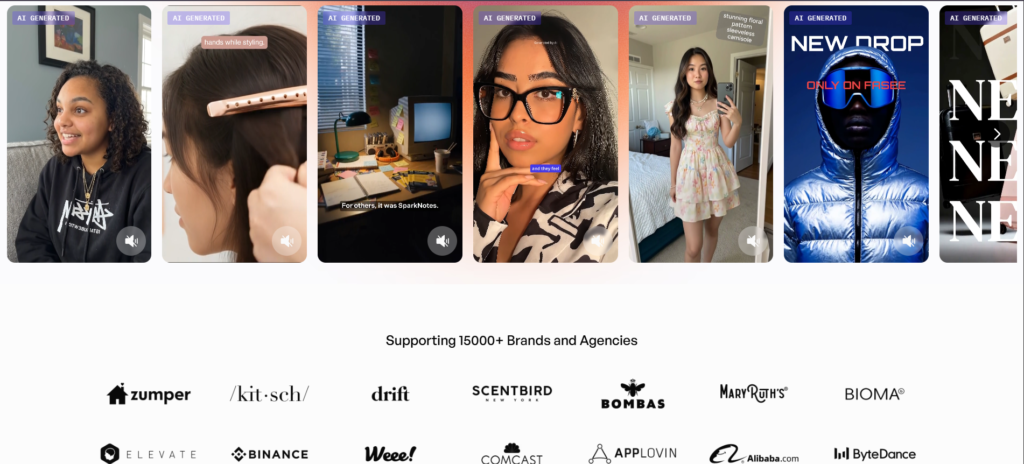
The product focuses heavily on UGC-style advertising, which refers to content that resembles videos created by real users or influencers rather than traditional polished commercials. UGC ads often perform well on social platforms because they feel more authentic and less like overt advertising.
Creatify attempts to automate this style of content generation. Users can select from a library of AI avatars and voice options, generate scripts automatically, and produce multiple variations of the same ad. The goal is not to replace all video production but to allow marketers to create many variations quickly so they can test which creative actually performs best.
The platform also includes features designed specifically for marketing teams, such as creative templates, multilingual video generation, and batch ad production. These features suggest that Creatify is targeting performance marketers who need a constant stream of creative assets rather than occasional brand videos.
Why AI Video Ad Generators Are Becoming Essential
The rise of AI video ad generators is not simply a technology trend. It reflects a deeper shift in how marketing campaigns operate.
In earlier eras of advertising, brands often produced a small number of highly polished creatives. A single video commercial might run for months across multiple channels. Today the environment looks very different. Platforms such as TikTok and Instagram reward constant experimentation. Performance marketing teams frequently test dozens of creative variations in order to discover what resonates with specific audiences.
This creates a production bottleneck. Even relatively simple video ads require scripting, filming, editing, and distribution. For many businesses the cost and time involved make it difficult to produce enough creative material to keep campaigns fresh.
AI video ad tools attempt to solve this bottleneck. Instead of treating ad production as a linear creative process, they treat it as a scalable generation problem. A marketer can produce multiple variations of an ad quickly, test them in campaigns, analyze the results, and refine the creative strategy based on data.
In that context, Creatify is less about replacing human creativity and more about increasing the volume and speed of creative testing.
How Creatify AI Works
Creatify’s workflow is designed to be straightforward, especially for marketers who are not experienced video producers.
Step 1: Import a Product or Marketing Concept
Users can begin by entering a product page URL, uploading product images, or providing a script. The system analyzes the product information and extracts key details such as product features and benefits. This becomes the starting point for generating the ad content.
Step 2: Generate an AI Script
Creatify includes built-in script generation capabilities. The platform can produce short advertising scripts tailored for social media formats. Marketers can modify these scripts, refine messaging, or adjust the tone to better match their brand voice.
Step 3: Create a UGC-Style Video
Once the script is ready, users select visual templates and AI avatars. Creatify offers a large library of digital actors and spokespersons that simulate influencer-style presentations. The platform combines the script, avatar, voice, and visuals to produce a video ad that resembles user-generated content.
Step 4: Export Ads for Campaign Use
After the video is generated, marketers can export it for use in advertising platforms such as TikTok, Instagram, or YouTube. Some teams generate multiple variations of the same ad and test them simultaneously in campaigns.
This workflow focuses on reducing friction. The platform tries to compress what would normally be several stages of production into a single automated process.
Key Features of Creatify AI
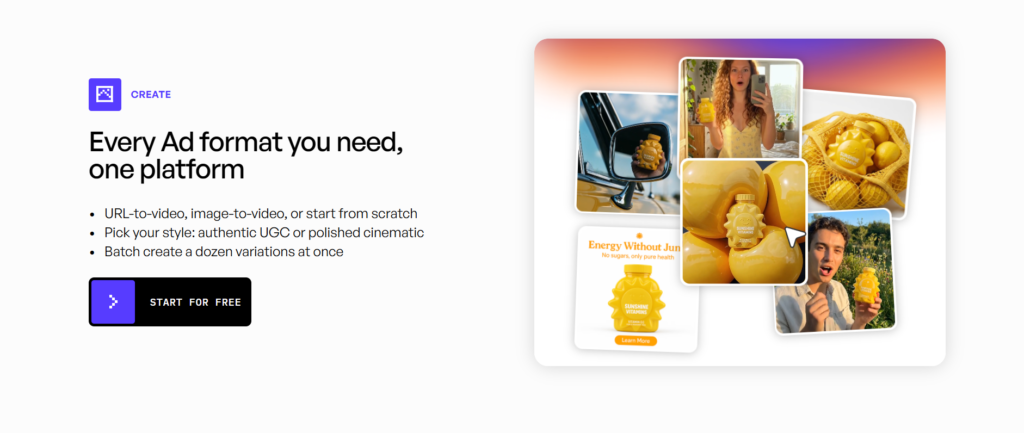
Creatify’s capabilities revolve around marketing video generation. Several features stand out in the platform’s design.
URL-to-Video Ad Generation
One of the platform’s most distinctive features is the ability to generate video ads directly from a product URL. The system extracts relevant product information and uses it to create marketing scripts and visual content. For ecommerce marketers this can significantly speed up the process of producing ad creatives.
AI Avatars and Spokesperson Videos
Creatify includes a large library of AI actors that simulate influencer-style presentations. These avatars deliver the script within the generated video, giving the ad a conversational tone similar to user-generated content.
Ad Templates and Creative Frameworks
The platform provides templates designed for common advertising formats. These templates help structure the ad around typical short-form marketing patterns such as product demonstration, testimonial, or problem-solution messaging.
Batch Ad Generation
Marketing teams often need multiple variations of the same ad to test different hooks or messaging angles. Creatify supports batch generation, allowing users to produce several creative variations quickly.
Multilingual Video Generation
Global marketing campaigns often require localized content. Creatify supports multiple languages and voice options, enabling teams to adapt campaigns for international audiences without filming new footage.
Creatify AI Pricing
Creatify offers several pricing tiers designed to accommodate different types of users.
The platform includes a free plan that allows users to experiment with limited video generation. This typically includes a small number of credits (10) that can be used to produce sample ads, though exported videos may contain watermarks.
Paid plans increase the number of credits available for generating videos and unlock additional features such as expanded avatar libraries, higher video output limits, and additional creative templates.
For larger teams or agencies managing multiple campaigns, higher-tier plans provide more credits and access to advanced capabilities designed for scaling ad production.
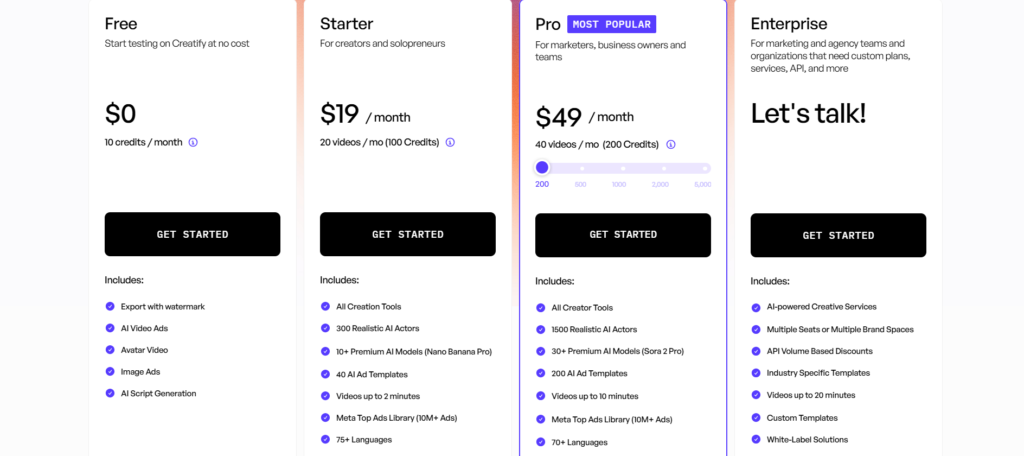
Because pricing structures for AI tools evolve frequently, businesses considering the platform should review the official pricing page to confirm the most current plan details.
Who Should Use Creatify AI?
Creatify is particularly useful for teams that rely heavily on performance marketing and social media advertising.
Ecommerce brands often fall into this category. These businesses frequently test multiple ad creatives in order to identify the combinations that generate the strongest conversions.
Marketing agencies can also benefit from tools like Creatify because they manage campaigns across multiple clients. AI-generated creatives allow them to produce more variations quickly without increasing production costs significantly.
Dropshipping businesses and product-focused startups are another natural audience. These teams often need fast creative output to support rapid product launches and promotional campaigns.
In contrast, companies focused primarily on long-form brand storytelling may find traditional video production more appropriate for their needs.
Pros and Limitations of Creatify AI
No tool is perfect, and it is important to evaluate both the advantages and the constraints.
Pros
Creatify’s biggest advantage is speed. The platform allows marketers to produce multiple video ad variations quickly, which supports the modern practice of creative testing.
The platform also lowers the barrier to entry for video advertising. Teams without dedicated video production resources can still produce usable marketing content.
Another strength is the UGC-style format. Ads that resemble influencer content often perform better on social media platforms than traditional corporate advertisements.
Limitations
AI-generated ads can sometimes feel formulaic if overused. When many marketers rely on similar templates and avatars, the resulting creatives may begin to look repetitive.
Another limitation is that AI video tools are not a substitute for strategic messaging. If the underlying marketing concept is weak, generating multiple versions of it will not automatically improve campaign results.
Finally, some brands may prefer authentic human creators for influencer-style content rather than AI avatars.
Creatify AI Alternatives
Creatify is part of a rapidly expanding category of AI advertising tools. Several alternatives are emerging in the same space.
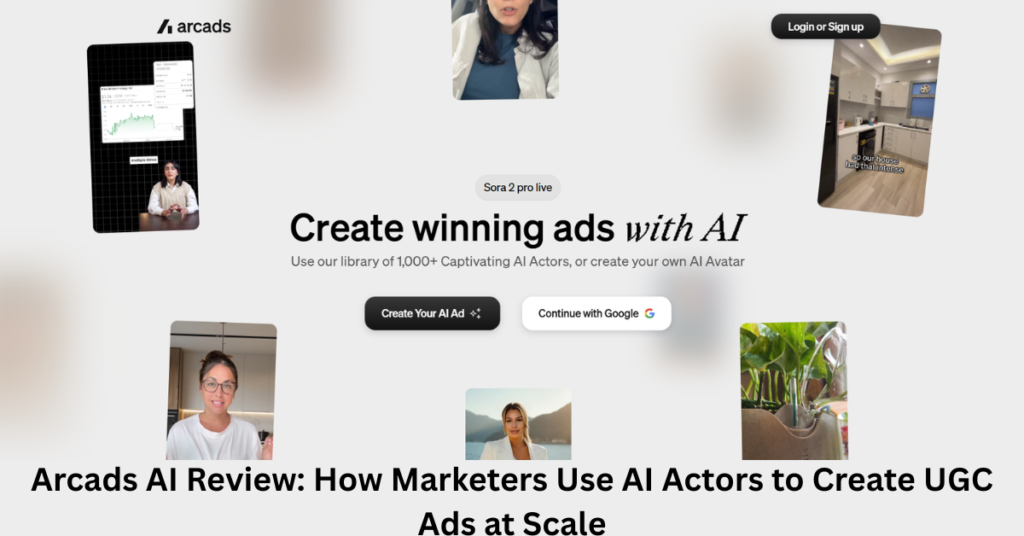
Arcads AI focuses on generating short video ads that mimic influencer-style promotional content. It is particularly popular among social media marketers who want quick creative variations.
HeyGen is known for its AI avatar video generation capabilities and is frequently used for marketing and training videos.
MakeUGC is another tool designed specifically for creating user-generated-style ad content for social media campaigns.
AdCreative AI approaches advertising from a slightly different angle by focusing on generating ad visuals and marketing creatives for performance campaigns.
The right choice depends largely on the specific needs of a marketing team and how they intend to produce and test ad creatives.
How Marketing Teams Use Creatify in Real Campaigns
In practice, the most successful marketing teams treat tools like Creatify as part of a broader creative experimentation process.
For example, an ecommerce company launching a new product might generate ten variations of a short video ad. Each version could emphasize a different product benefit or open with a different attention-grabbing hook.
These variations are then deployed across advertising platforms. Performance data reveals which versions capture attention and drive conversions.
The winning creatives can then be scaled with higher advertising budgets, while weaker versions are replaced with new experiments.
This approach transforms ad creation into a continuous testing process rather than a one-time production event.
Is Creatify AI Worth Using?
For teams focused on performance marketing, Creatify can be a valuable addition to the creative workflow. The platform makes it possible to produce a high volume of ad variations quickly, which is essential for modern social media advertising.
However, the tool works best when combined with thoughtful marketing strategy. AI can accelerate creative production, but it cannot replace a clear understanding of customer motivations or product positioning.
Businesses that already rely on frequent creative testing are likely to find the platform particularly useful. For organizations that produce only occasional marketing videos, the benefits may be less pronounced.
In the right context, though, Creatify represents a meaningful shift in how marketing teams produce advertising content.
Frequently Asked Questions (FAQs)
What is Creatify AI?
Creatify AI is an artificial intelligence platform that generates marketing video ads automatically. It allows marketers to produce UGC-style ad creatives using product information, scripts, and AI avatars.
Can Creatify generate ads from product pages?
Yes. One of Creatify’s main features is the ability to generate video ads directly from a product URL. The platform extracts product information and uses it to build advertising scripts and video creatives.
Is Creatify AI free?
Creatify offers a limited free plan that allows users to experiment with the platform. Paid plans provide additional credits and expanded creative capabilities.
Who should use Creatify AI?
Creatify is most useful for ecommerce brands, marketing agencies, and performance marketing teams that need to produce large numbers of ad creatives for testing.
Are AI-generated video ads effective?
AI-generated ads can be effective when used as part of a broader creative testing strategy. They allow marketers to experiment with multiple creative approaches quickly and identify which variations perform best.