Modern marketing teams produce more campaign content than ever before. Every product launch, ad campaign, webinar funnel, or lead generation initiative requires landing pages, email sequences, ad copy, and follow-up messaging.
For years, writing this content was slow and resource-intensive. Campaign teams often waited days or weeks for copy drafts, revisions, and approvals before a campaign could go live.
AI copywriting tools are changing that workflow.
Instead of starting every landing page or campaign with a blank document, marketers now use AI to generate campaign messaging, draft landing page sections, test multiple variations, and refine conversion copy quickly.
Used correctly, AI landing page copywriting does not replace marketing strategy. Instead, it accelerates the production process and gives teams more room to experiment with messaging.
Understanding how marketing teams actually use AI in campaign workflows reveals why AI copywriting tools are rapidly becoming a core part of modern marketing operations.
Key Takeaways
- AI landing page copywriting helps marketing teams produce campaign content faster by generating structured drafts for headlines, value propositions, and calls to action. Instead of starting from scratch, marketers begin with AI-generated frameworks that they refine and optimize.
- AI tools are particularly useful for campaign experimentation. Marketing teams can generate multiple variations of landing page headlines, ad copy, and CTA messaging quickly, making A/B testing far easier than traditional manual copywriting workflows.
- AI works best as a drafting and iteration tool, not a replacement for marketing strategy. Successful teams combine AI-generated content with human editing to ensure strong messaging, brand voice consistency, and persuasive storytelling.
- Landing page–focused AI tools such as Unbounce Smart Copy, Instapage, Landingi, and HubSpot Campaign Assistant are designed specifically for campaign workflows. These platforms help marketers generate, structure, and optimize landing page content inside dedicated campaign environments.
- The most effective workflow is a hybrid approach: AI generates initial copy and variations, while human marketers refine positioning, improve persuasion, and align the messaging with campaign goals.
Table of Contents
Why AI Is Changing How Marketing Campaigns Are Written
AI landing page copywriting refers to the use of artificial intelligence tools to generate headlines, value propositions, and conversion-focused messaging for marketing landing pages. These tools help marketing teams produce campaign content faster while testing multiple messaging variations.
Marketing teams today operate in an environment where speed and experimentation matter as much as creativity.
A typical digital campaign can include:
- landing pages
- paid ad copy
- email nurture sequences
- social media promotions
- remarketing ads
Each campaign requires dozens of variations of messaging.
Producing this volume of content manually slows down marketing execution.
AI copywriting tools address this challenge by generating initial drafts and variations quickly, allowing marketers to focus more on strategy and optimization.
The Content Demand in Modern Marketing
Digital marketing campaigns rely heavily on conversion-focused landing pages. Every traffic source—from paid ads to email campaigns—needs a dedicated landing page aligned with the campaign message.
If a team launches ten campaigns per quarter, they may need:
- ten landing pages
- dozens of ad variations
- multiple email sequences
- ongoing campaign optimization
AI helps marketing teams handle this content demand without dramatically increasing copywriting resources.
Why Landing Pages Matter in Campaign Success
Landing pages sit at the center of most marketing campaigns.
A well-designed landing page performs several roles:
- communicates the campaign’s value proposition
- explains the product or offer clearly
- builds credibility through proof and testimonials
- guides visitors toward a conversion action
Because landing pages play such an important role in campaign performance, marketers frequently test different versions of headlines, messaging, and calls to action.
AI landing page copywriting makes these iterations easier.
What AI Landing Page Copywriting Tools Actually Do
AI copywriting tools do more than generate random text. Most tools trained for marketing use structured frameworks to produce conversion-focused content.
These tools can generate:
- headlines and subheadlines
- value propositions
- feature explanations
- product benefit sections
- call-to-action messaging
Some tools even generate entire landing page structures based on a short description of the campaign or product.
AI Headline Generation
Landing page headlines are often the first element marketers test when optimizing campaigns.
AI tools can generate multiple headline variations quickly, helping teams explore different messaging angles such as:
- benefit-driven headlines
- problem-solution headlines
- urgency-focused headlines
- curiosity-based headlines
This allows marketing teams to test different positioning strategies before committing to a final version.
AI Value Proposition Drafting
The value proposition explains why the product or service matters to the audience.
AI tools can help marketers draft these sections by expanding short prompts into full messaging blocks that highlight key benefits.
While the final version often requires editing, AI drafts give teams a faster starting point.
AI Call-to-Action Variations
Call-to-action (CTA) copy can significantly influence conversion rates.
AI tools can generate dozens of CTA variations such as:
- “Start your free trial”
- “Get instant access”
- “Download the guide”
- “Claim your offer”
Marketers then test these variations across campaigns.
How Marketing Teams Use AI to Write Landing Pages
AI landing page copywriting usually follows a structured workflow rather than a single automated step.
Marketing teams typically use AI in three main stages.
Generating the First Draft of Landing Page Copy
Most teams begin by using AI tools to create a first draft of landing page content.
Marketers provide inputs such as:
- product description
- target audience
- campaign goal
- key benefits
The AI then generates a draft structure that may include:
- headline
- subheadline
- problem explanation
- solution overview
- feature highlights
- benefits
- call to action
Instead of writing everything from scratch, the marketing team begins with a structured draft.
Structuring the Landing Page Sections
Landing pages typically follow proven conversion frameworks such as:
- problem → solution → benefits → CTA
- attention → interest → desire → action
- value proposition → proof → offer
AI tools can help populate each section quickly.
For example, marketers may ask the AI to generate:
- a problem statement describing the audience’s pain point
- three benefit paragraphs
- a section explaining how the product works
This approach dramatically accelerates page creation.
Creating Multiple Copy Variations
Conversion optimization requires testing.
Marketing teams frequently generate multiple variations of:
- headlines
- subheadlines
- product descriptions
- CTA copy
AI makes this process far faster than manual writing.
Instead of writing ten variations manually, marketers can generate them instantly and refine the best options.
How AI Helps Marketing Teams Launch Campaigns Faster
Landing pages rarely exist in isolation. They are usually part of broader marketing campaigns.
AI helps accelerate several campaign creation tasks.
Campaign Concept Development
Marketers often use AI to brainstorm campaign messaging ideas.
For example, AI prompts may generate:
- campaign themes
- messaging angles
- headline concepts
- taglines
This helps teams explore different positioning strategies before launching campaigns.
Writing Ad Copy Variations
Paid advertising platforms require multiple ad variations for testing.
AI tools can generate variations for:
- Google Ads
- Facebook ads
- LinkedIn campaigns
- display ads
This allows marketers to quickly test messaging combinations.
Creating Email Campaign Content
Landing pages often connect with email marketing campaigns.
AI tools help draft:
- announcement emails
- product launch emails
- follow-up nurture emails
This keeps campaign messaging consistent across channels.
Aligning Landing Pages With Campaign Messaging
Campaign performance improves when messaging remains consistent from advertisement to landing page.
AI tools help marketers align these elements by generating campaign-specific landing page content that mirrors ad messaging.
Real Workflow: How Marketing Teams Combine AI and Human Editing
The most effective marketing teams treat AI as a drafting and experimentation tool, not a final copywriting engine.
The workflow typically looks like this:
AI → draft
human → refine
AI → generate variations
human → approve final copy
AI for Drafting
AI tools generate the first version of landing page content.
This eliminates blank-page friction and speeds up production.
Humans for Strategic Messaging
Human marketers refine the messaging to ensure:
- brand voice consistency
- emotional persuasion
- clear positioning
This stage ensures the final copy resonates with the target audience.
AI for Iteration and Testing
Once the campaign launches, AI helps generate new variations for A/B testing.
Teams continuously test:
- headline variations
- CTA language
- benefit messaging
This iterative process improves campaign performance over time.
AI Tools Designed for Landing Page Copywriting
While many AI writing tools focus on general marketing content, several platforms specifically support landing page creation and campaign messaging.
Unbounce Smart Copy
Unbounce is widely known for landing page building, and its Smart Copy AI focuses on conversion-focused messaging.
Key capabilities include:
- AI-generated landing page sections
- headline and CTA variations
- conversion-focused copy suggestions
Because the platform is integrated with landing page creation tools, marketers can generate and deploy content within the same environment.

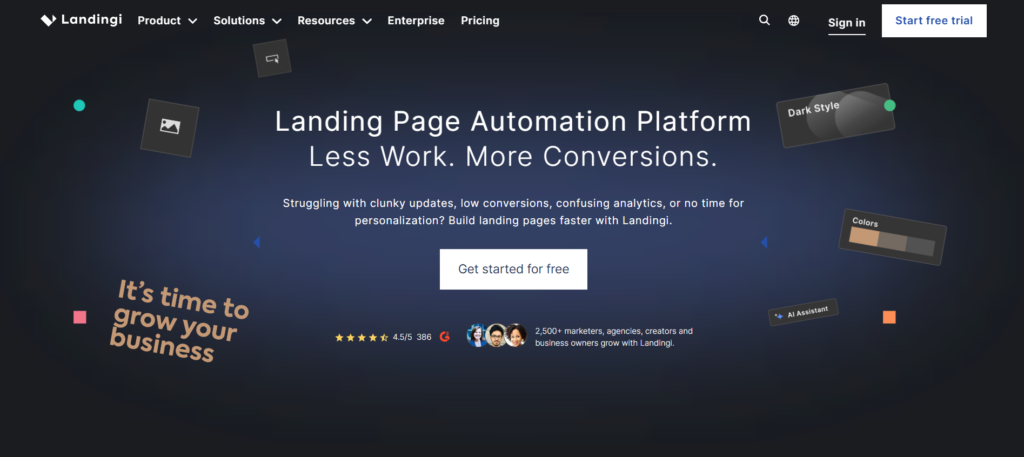
Landingi AI Landing Page Builder
Landingi combines AI copywriting with landing page design.
Features include:
- AI-generated landing page content
- automatic section structure
- campaign-specific messaging templates
This helps marketing teams quickly create pages aligned with specific campaigns.
HubSpot Campaign Assistant
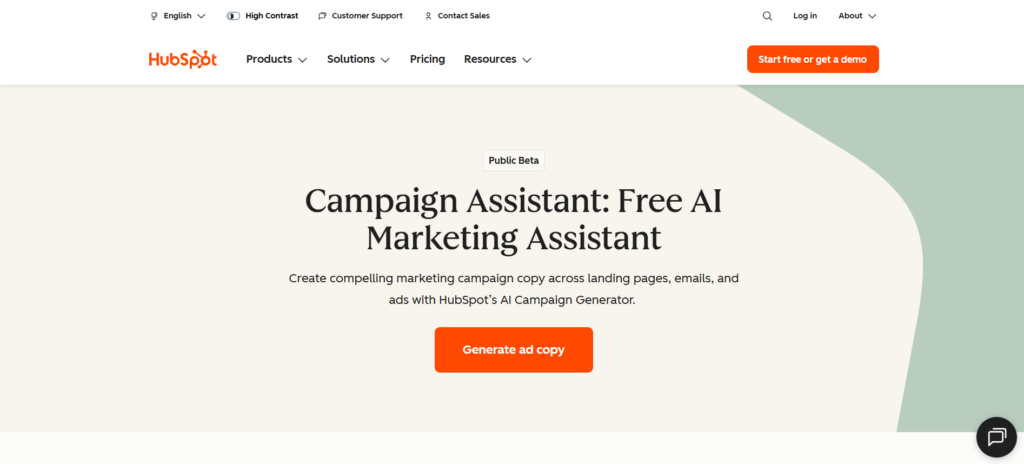
HubSpot’s AI campaign assistant focuses on marketing campaign creation.
It generates:
- landing page copy
- ad copy
- marketing emails
Because it integrates with HubSpot’s marketing automation tools, teams can generate campaign content and deploy it directly inside their marketing stack.
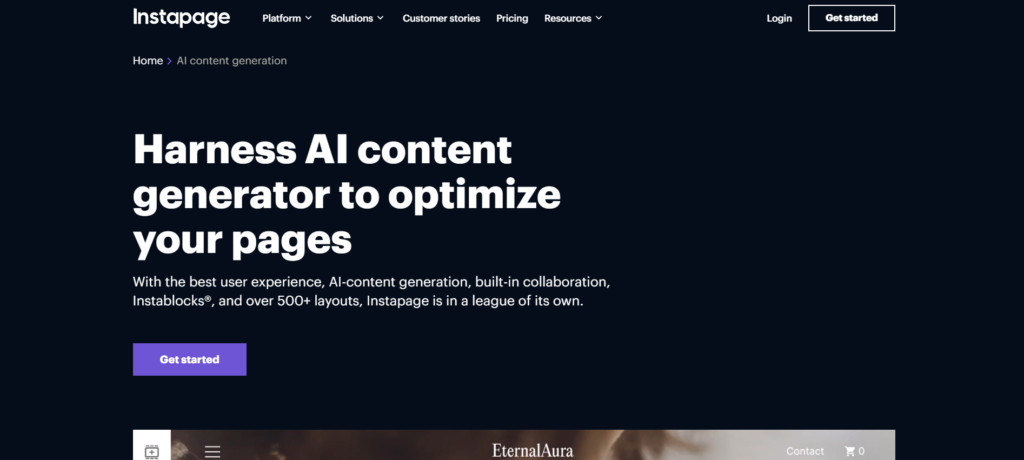
Instapage AI Content Generation
Instapage is another platform built around landing page optimization.
Its AI capabilities help marketers:
- generate landing page messaging
- rewrite copy for clarity
- create variations for testing
Instapage also integrates analytics and conversion optimization features.
Read our guide on how to choose the right AI copywriting tool for marketing teams.
If you want to explore platforms in more detail, see our guide to the best AI copywriting tools for marketing.
Benefits of Using AI for Landing Pages and Campaign Copy
AI landing page copywriting provides several practical advantages for marketing teams.
Faster Content Production
AI reduces the time required to produce campaign copy.
What once required several days of writing and revisions can now begin with an AI-generated draft.
More Copy Variations for Testing
Conversion optimization depends on experimentation.
AI tools allow marketers to generate multiple messaging variations quickly, enabling better A/B testing.
Lower Content Production Costs
Producing high volumes of campaign content can be expensive.
AI tools help teams scale content production without proportionally increasing costs.
Scalable Campaign Content
As marketing teams grow their campaign activity, AI helps them maintain speed and consistency across multiple campaigns.
Limitations of AI Landing Page Copywriting
Despite its advantages, AI copywriting also has limitations.
Understanding these limitations helps teams use the technology more effectively.
Generic Messaging Risk
AI tools may produce messaging that feels generic if prompts lack specificity.
Marketers must refine and personalize the content.
Need for Human Editing
AI-generated copy often requires editing to improve tone, clarity, and brand alignment.
Brand Voice Consistency
Maintaining a distinct brand voice remains easier with human oversight.
AI tools work best when guided by strong brand guidelines.
Best Practices for Using AI in Landing Page and Campaign Copywriting
Marketing teams that achieve the best results follow structured practices when using AI.
Provide Detailed Prompts
The quality of AI output depends heavily on the instructions provided.
Marketers should include:
- audience description
- product benefits
- campaign goals
- tone of voice
Combine AI With Marketing Strategy
AI generates text, but strategy still comes from marketers.
Teams must define campaign messaging and positioning first.
Test Multiple Variations
AI makes experimentation easier.
Marketers should use this advantage to test multiple headline and CTA variations.
Always Review AI Output
AI copy should always be reviewed before publishing to ensure clarity, accuracy, and brand consistency.
The Future of AI in Marketing Campaign Creation
AI is likely to play an even larger role in marketing campaigns over the coming years.
Emerging developments include:
- personalized landing pages generated dynamically
- AI-driven campaign optimization
- automated message testing across channels
As AI tools continue to improve, marketing teams will spend less time drafting content and more time refining campaign strategy and analyzing results.
The future of marketing copywriting will likely combine AI efficiency with human creativity.
When used thoughtfully, AI landing page copywriting becomes a powerful tool that helps marketing teams launch campaigns faster, test messaging more effectively, and continuously improve their conversion performance.
Frequently Asked Questions (FAQs)
What is AI landing page copywriting?
AI landing page copywriting refers to the use of artificial intelligence tools to generate content for marketing landing pages. These tools can produce headlines, value propositions, product descriptions, benefit sections, and call-to-action messaging based on prompts provided by marketers. AI helps teams create campaign content faster and experiment with multiple copy variations.
How do marketing teams use AI to write landing pages?
Marketing teams typically use AI in a structured workflow. AI tools generate the first draft of landing page content, including headlines, problem statements, and benefit sections. Marketers then edit the copy to align with brand voice and campaign strategy. AI is often used again to generate variations for A/B testing and campaign optimization.
Can AI write an entire landing page?
Yes, many AI tools can generate a full landing page structure including headlines, subheadlines, feature explanations, and CTAs. However, most marketing teams still review and refine the content. Human editing ensures the messaging is persuasive, accurate, and aligned with the brand’s tone.
What are the best AI tools for landing page copywriting?
Several AI tools are designed specifically for landing pages and campaign content. Popular options include:
- Unbounce Smart Copy, which generates conversion-focused landing page messaging
- Instapage AI, which helps optimize landing page copy and test variations
- Landingi AI, which combines AI copywriting with landing page design
- HubSpot Campaign Assistant, which generates campaign messaging across landing pages, ads, and email marketing
These tools integrate AI copywriting with landing page creation and campaign workflows.
Is AI copywriting better than traditional copywriting for marketing campaigns?
AI copywriting is faster and more scalable than traditional copywriting, especially for generating multiple variations of campaign messaging. However, human copywriters remain essential for strategic messaging, brand storytelling, and persuasive writing. Most marketing teams use a hybrid approach that combines AI drafting with human editing.
Does AI-generated landing page copy convert well?
AI-generated landing page copy can perform well when it is refined and optimized by marketers. AI is particularly useful for producing multiple headline and CTA variations that can be tested through A/B experiments. The highest-converting landing pages usually combine AI-generated drafts with human optimization and conversion strategy.